Bitcoin ATM Near Me: How to Find One and Buy or Sell Safely
How to find a bitcoin machine close to you, buy or sell step by step, what fees and limits to expect, US rules, and the ATM scams to avoid.

Key takeaways
- Use CoinATMRadar or an operator locator to find a bitcoin machine close to you and check it supports what you need.
- Kiosk markups are often far higher than exchange fees, so compare the on-screen price with the market price first.
- Always scan your own wallet address; never use a QR code or address someone else gave you.
- Crypto ATMs are a top scam channel, with about $389 million in reported US losses in 2025.
If you are searching for a bitcoin machine close to me, you probably want two things: the nearest working machine and confidence that you will not overpay or get scammed. Bitcoin ATMs, also called crypto kiosks, let you swap cash for bitcoin in minutes at gas stations, convenience stores and malls across the United States, and some also let you sell bitcoin for cash.
This guide explains how to find a bitcoin machine close to me quickly, how the buying and selling process works step by step, what fees and limits to expect, how US rules affect you, and how to spot the scams that have made crypto ATMs a favorite tool of fraudsters. It is written for US readers, from first-time buyers to people who simply need to turn bitcoin into cash today.
Already own bitcoin and just want cash? Our guide on how to sell bitcoin compares every cash-out option, including cheaper ones than a kiosk.
What Is a Bitcoin ATM?
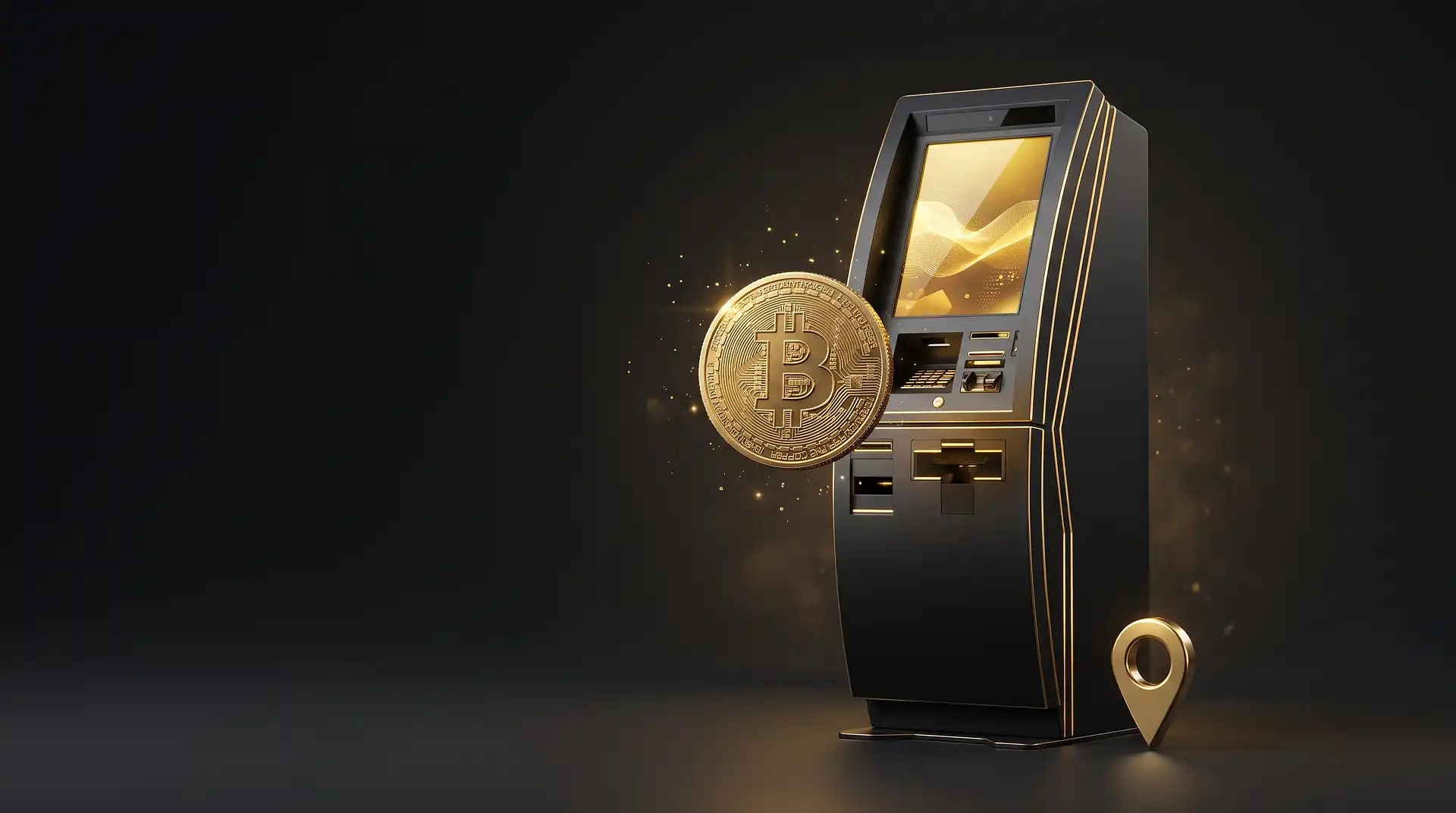
A bitcoin ATM is a kiosk connected to the internet that lets you buy cryptocurrency with cash or a debit card, and sometimes sell crypto for cash. Unlike a bank ATM, it does not connect to your bank account. Instead, it sends bitcoin to a wallet address you provide, usually by scanning a QR code on your phone.
Most machines are run by private operators, not banks. Operators such as Bitcoin Depot, CoinFlip, Athena Bitcoin, Bitstop and Coinhub place kiosks in retail locations and charge a markup for the convenience of buying with cash.
One-way and two-way machines
There are two main types of crypto ATM:
- One-way machines only let you buy crypto with cash. These are the most common.
- Two-way machines let you buy and also sell crypto, dispensing cash when you send bitcoin to the machine’s address.
Many kiosks also support other coins such as Ethereum, Litecoin, Bitcoin Cash or stablecoins like USDT and USDC. Check the operator’s website or the machine screen to see what is available before you visit.
How to Find a Bitcoin Machine Close to Me
The fastest way to find a nearby kiosk is to use an online map or the operator’s own locator. Each option has strengths.
| Method | What it shows | Best for |
|---|---|---|
| CoinATMRadar map | Machines from many operators, with supported coins and buy or sell options | Comparing several nearby kiosks |
| Operator locators (Bitcoin Depot, CoinFlip, Athena, Bitstop, Coinhub) | Only that operator’s machines, often with live status | Checking hours and whether a machine is online |
| Google Maps search | Stores that list a kiosk on their profile | Quick directions and store hours |
| Operator apps | Nearby machines, limits and account status | Repeat users who verified their identity |
Tips for choosing the right machine
Once you have a few options, narrow them down:
Plainly put
A bitcoin ATM is a fast way to swap cash for bitcoin, but it is one of the most expensive, and it should only ever send coins to your own wallet.
- Check buy and sell support. If you want cash out, filter for two-way machines.
- Confirm supported coins. Not every kiosk supports Ethereum or stablecoins.
- Compare fees. Operators often post rates in their apps or on the screen before you confirm.
- Check store hours. A kiosk inside a store is only available when the store is open.
- Look for recent reviews. Reviews can flag machines that are frequently offline or out of cash.
- Prefer well-lit, busy locations. Personal safety matters when you carry cash.
How to Buy Bitcoin at a Crypto ATM
Buying bitcoin at a kiosk usually takes five to fifteen minutes. The exact screens vary, but the process is similar across operators.
What you need before you go
Prepare these items before leaving home:
- A bitcoin wallet on your phone, so you can show a receiving address as a QR code.
- Cash in good condition, since machines can reject worn or folded bills.
- A phone number for a verification code.
- A government photo ID if you plan to buy larger amounts.
Step by step
Once you are at the kiosk, the screens usually follow this order:
- Select “Buy” on the screen and choose bitcoin.
- Enter your phone number and the code sent by text.
- Complete any identity checks the machine asks for, such as scanning your ID.
- Scan the QR code of your own wallet address.
- Review the exchange rate and fees shown on the screen.
- Insert your cash, one bill at a time.
- Confirm the purchase and keep the printed or emailed receipt.
The bitcoin is sent to your wallet, usually within minutes, although network congestion can cause delays. Always double-check that the wallet address belongs to you. If anyone else gave you the address, stop and read the scam section below.
How to Sell Bitcoin for Cash at an ATM
If your nearest machine supports selling, the process works in reverse. Expect a few extra steps, because the operator must wait for your bitcoin to arrive before releasing cash.
- Choose “Sell” and pick bitcoin.
- Verify your phone number and identity.
- Enter the dollar amount you want. Some machines only dispense in multiples of $20.
- The kiosk shows a bitcoin address and the exact amount to send.
- Send that amount from your wallet, including enough for network fees.
- Wait for the required confirmations. Some operators give you a redemption code to collect cash later.
- Return to the machine, enter or scan the code and collect your cash.
Selling at an ATM is convenient when you need cash quickly, but it is often more expensive than selling on an exchange and withdrawing to your bank.
How Crypto Kiosks Work Behind the Scenes
It helps to know what happens after you insert cash. The kiosk itself does not hold a big pile of bitcoin. Instead, the operator keeps a balance of bitcoin in its own wallets or buys it through exchanges and liquidity providers. When you confirm a purchase, the operator’s system sends bitcoin from its wallet to the address you scanned and records the transaction for compliance purposes.
The cash you insert stays in the machine until an armored car service or store staff collects it. That cash handling, along with rent paid to the host store, insurance, software and customer support, is a big part of why kiosk prices are higher than exchange prices.
Two-way machines need even more work. The operator must keep enough cash loaded for withdrawals and monitor incoming bitcoin to make sure each sale is real before paying out. That is why sell transactions often require waiting for network confirmations.
Where kiosks are usually located
In the US, crypto kiosks are most commonly found in:
- Gas stations and convenience stores, often open late or around the clock.
- Grocery and liquor stores in busy neighborhoods.
- Shopping malls and large retail chains.
- Vape, phone repair and check-cashing shops.
- Some laundromats and pharmacies.
Big cities such as Los Angeles, Houston, Chicago, Miami and New York have hundreds of kiosks, while rural areas may have only a few. If you live in a small town, check the map before driving, since the nearest machine could be in the next county.
Buying Other Coins at a Kiosk
Many people searching for a bitcoin ATM actually want a different coin. Support varies by operator, but common options include:
| Coin | How often supported | Notes |
|---|---|---|
| Bitcoin (BTC) | Almost every machine | Usually the lowest markup on the screen |
| Ethereum (ETH) | Many machines | Check that your wallet supports Ethereum addresses |
| Litecoin (LTC) | Many machines | Faster confirmations than bitcoin |
| Bitcoin Cash (BCH) | Some machines | Different from bitcoin; do not mix up addresses |
| USDT and USDC | Growing number of machines | Make sure you choose the correct network |
Always match the coin to the right type of wallet address. Sending a coin to an address on the wrong network can cause a permanent loss.
Questions to Ask Before You Use an Operator
Not every operator offers the same level of service. Before handing over cash, look for clear answers to these questions:
- Is the operator registered with FinCEN and licensed in your state?
- Are fees and the exchange rate shown clearly before you insert money?
- Is there a phone number or live chat for support?
- Does the receipt include a transaction ID you can check?
- Does the screen warn about scams and explain how to report fraud?
- What happens if the machine takes your cash but fails to send the bitcoin?
Reputable operators usually answer these on their websites. If you cannot find any of this information, choose another machine.
Bitcoin ATM Fees and Limits
Convenience comes at a price. Crypto ATMs typically cost much more than buying on an online exchange, because operators pay for hardware, rent, cash handling and compliance.
How fees work
Fees usually come in two parts:
- A markup built into the exchange rate. The machine’s bitcoin price is higher than the market price. This markup is often the largest cost.
- A flat transaction fee. Some operators add a fixed fee per transaction.
Markups vary widely by operator and location, and many are in the double digits as a percentage of your purchase. Always compare the price on screen with the current market price on a site such as CoinGecko before inserting money. If the difference seems large, an online exchange is likely cheaper.
| Option | Typical cost level | Speed | Best for |
|---|---|---|---|
| Bitcoin ATM | High, with a large markup | Minutes | Buying with cash, no bank account needed |
| Online exchange (Coinbase, Kraken, Gemini) | Lower, often around 1% or less on advanced platforms | Minutes after account setup | Most regular buyers |
| Payment apps (Cash App, PayPal, Venmo) | Moderate | Instant | Small, simple purchases |
| Spot bitcoin ETF in a brokerage | Low annual fee | Market hours | Price exposure without holding coins |
Limits and identity checks
Operators must follow federal anti-money-laundering rules, so limits rise as you share more information. Small purchases may only require a phone number, while larger ones require ID, a selfie or additional details. Daily and monthly caps vary by operator and state.
Some states have set their own caps. California’s Digital Financial Assets Law, for example, limited crypto kiosk transactions to $1,000 per customer per day starting January 1, 2024. Other states have passed or proposed similar daily limits, fee caps or refund rules for new customers, so check what applies where you live.
Rules and Regulation in the US
Crypto ATM operators are generally treated as money transmitters. That means they must register with FinCEN, the federal financial crimes agency, and follow Bank Secrecy Act rules on customer identification, record keeping and suspicious activity reporting. Many states also require operators to hold a money transmitter license.
State lawmakers have become more active as scams have grown. Recent laws in several states require operators to display clear fee disclosures, warn customers about scams on the screen, set daily transaction limits for new users or offer refunds in certain fraud cases. Rules are changing quickly, so a machine in one state may behave differently from one in another.
Crypto ATM Scams: The Biggest Risk
The most important thing to know about crypto ATMs is that scammers love them. Cash goes in, crypto goes out to an address the scammer controls, and the money is almost impossible to recover.
According to the FBI’s Internet Crime Complaint Center (IC3), Americans filed more than 13,400 complaints involving crypto ATMs and kiosks in 2025, reporting losses of about $389 million, a 58% jump from 2024. More than half of those complaints came from people over 50, who reported about $302 million of the losses.
Common scam scripts
Most crypto ATM scams follow a few patterns:
- Government impersonation. A caller claims to be from the IRS, the police, a court or the Social Security Administration and says you must pay a fine in bitcoin.
- Bank or tech support impersonation. You are told your account is compromised and you must move money to a “safe” wallet.
- Romance scams. Someone you met online asks for money and directs you to a kiosk.
- Investment scams. A new “mentor” promises high returns if you deposit through an ATM.
- Utility shutoff threats. A caller says your power will be cut unless you pay immediately.
Red flags
Stop the transaction if any of these apply:
- Someone else gave you the QR code or wallet address.
- A caller stays on the phone while you use the machine.
- You are told to keep the payment secret, even from bank staff or family.
- You are being rushed or threatened.
- A government agency, utility or legitimate business is asking for payment in crypto. Real agencies do not do this.
If you think you have been scammed, contact the ATM operator immediately, report the incident to IC3 at ic3.gov and the FTC at ReportFraud.ftc.gov, and keep your receipts. Recovery is rare, and anyone who later offers to get your money back for a fee is likely running a recovery scam.
Safety Tips at the Machine
Beyond scams, a few practical habits keep your money and yourself safe:
- Use your own wallet, and confirm the address on your phone before scanning.
- Start with a small test transaction if you are new.
- Visit during store hours in a busy, well-lit place.
- Shield your screen and cash from onlookers.
- Keep receipts until the transaction is confirmed in your wallet.
- Avoid operators with no clear contact details or support line.
A First-Time Buyer Checklist
If this is your first visit to a crypto kiosk, run through this short checklist before you leave home. It takes two minutes and prevents most common problems.
- I have installed a reputable wallet app and written down its recovery phrase somewhere safe and offline.
- I know how to open the “Receive” screen and show my own QR code.
- I have checked the current bitcoin price on a market site so I can compare it with the kiosk price.
- I know the operator’s fees, daily limit and whether my purchase will need an ID.
- Nobody has asked me to make this purchase, and nobody is on the phone guiding me.
- I am only spending money I can afford to see rise and fall in value.
If any item on the list is a “no,” pause and sort it out first. That small delay can save you from costly mistakes that cannot be undone.
Taxes on ATM Purchases and Sales
Buying bitcoin with cash at an ATM is not a taxable event by itself. Selling bitcoin for cash at an ATM is. The IRS treats crypto as property, so a sale creates a capital gain or loss based on the difference between your sale price and what you paid. Keep receipts from every ATM transaction, including the fees, since they affect your cost basis and gain. If you use several kiosks or apps, a crypto tax tool can combine your records so that each later sale is matched with the right purchase price.
Alternatives to Bitcoin ATMs
For many people, a kiosk is not the cheapest or safest option. Consider these alternatives:
- Online exchanges. Buy with a bank transfer or debit card at much lower costs, then move coins to your own wallet.
- Payment apps. Cash App, PayPal and Venmo let you buy bitcoin directly inside apps you may already use.
- Spot bitcoin ETFs. Funds such as iShares Bitcoin Trust (IBIT) give price exposure through a regular brokerage account.
- Cash deposit at retail. Some apps let you load cash at stores and then buy crypto online.
Use a kiosk when paying in cash really matters to you, and compare total costs first.
Frequently Asked Questions
These are the most common questions people ask about using bitcoin kiosks.
Small purchases may only require a phone number. Larger amounts usually require a government photo ID and sometimes a selfie, because operators must follow federal anti-money-laundering rules.
Usually a few minutes to an hour, depending on network congestion and the operator’s process. Your receipt should include a transaction ID you can check on a block explorer.
Almost never. Bitcoin transactions cannot be reversed. Always check that the address is your own before confirming.
Operators charge a markup to cover hardware, rent, cash handling and compliance costs. That markup is often much higher than exchange fees.
Yes, they are legal when operated by registered money transmitters. Some states impose extra limits on transaction size and fees.
Many machines support Ethereum and other coins, but not all. Check the operator’s locator or the machine screen first.
Only if the host store is open 24 hours. Many kiosks in gas stations and convenience stores are available late at night, but machines inside malls or shops follow store hours.
Keep your receipt, take a photo of the screen if possible and contact the operator’s support line right away. Operators can usually trace the transaction using your phone number and the time of purchase.
Many machines accept purchases starting from small amounts, such as $5 to $20, but flat fees make very small purchases expensive. Check the minimum on the screen before inserting cash.
Yes, anyone with your receiving address can send bitcoin to you. That is safe for you as the receiver, but never send money to an address someone else gives you unless you know and trust them.
Final Thoughts
Finding a bitcoin machine close to me is easy with CoinATMRadar or an operator’s locator, and the buying process takes only minutes once you have your own wallet ready. Two-way machines also let you sell bitcoin for cash when you need it quickly.
The trade-offs are cost and risk. Kiosk markups are much higher than exchange fees, and FBI data show crypto ATMs are a major channel for scams, especially against older adults. Use your own wallet address, compare prices before you insert cash, and walk away if anyone else is directing the transaction.
Sources
- Coin ATM Radar: Bitcoin ATM map
- BleepingComputer: FBI says Americans lost over $388 million to crypto ATM scams in 2025
- California DFPI: Court upholds daily transaction limit for crypto kiosks
- FinCEN: Money services business registrant search
- FTC: What to know about cryptocurrency and scams
- IRS: Digital assets
Disclaimer: This article is for general information only and is not financial or legal advice. Fees, limits and laws change; check with the operator and your state regulator before transacting.