Can You Buy Part of a Bitcoin? How Much Should You Buy?
You can buy a fraction of a Bitcoin from $1. See what small amounts buy, how fees eat into them, and how much Bitcoin experts suggest owning.

Key takeaways
- Bitcoin splits into 100 million satoshis, and most US apps let you start with $1.
- $100 bought about 124,580 sats at the late October 2026 price, before fees.
- Small buys pay the highest percentage fees, so compare platforms or use free recurring buys.
- Large investment firms suggest keeping Bitcoin to a few percent of a diversified portfolio at most.
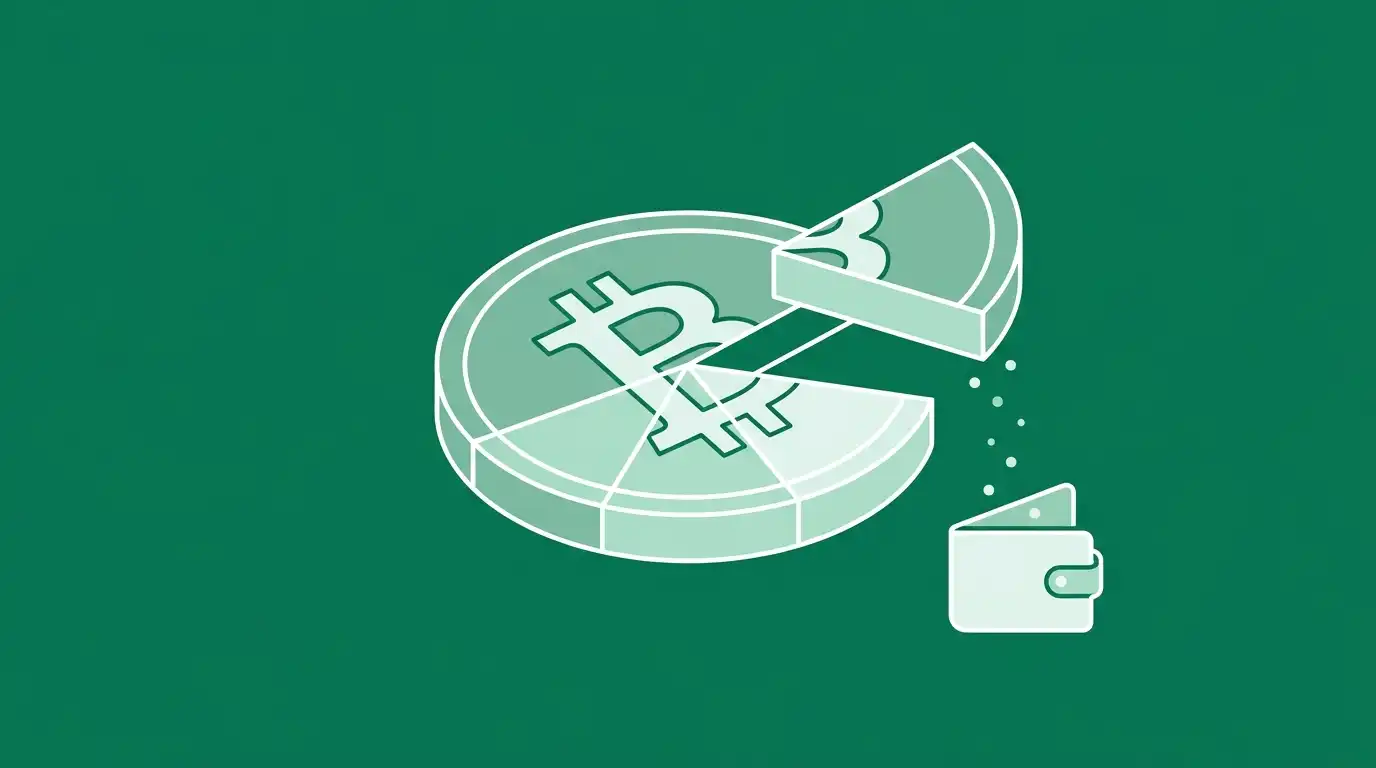
Can you buy partial Bitcoin? Yes. You do not need to buy a whole coin. Bitcoin can be split into 100 million smaller units, and most US apps and exchanges let you start with as little as $1. With one Bitcoin trading at about $80,268 in late October 2026, buying a fraction is how almost every individual investor gets started.
Most people who ask can you buy partial Bitcoin also want to know the next thing: how much should they actually buy? This guide answers both. It explains how fractional Bitcoin works, what $10, $100 or $1,000 buys today, where to buy small amounts, what fees do to small purchases, and how professional investment firms think about sizing a Bitcoin position, so you can decide on an amount that fits your own finances.
Can You Buy Partial Bitcoin? Yes, Here Is How It Works
When you buy Bitcoin, you are not buying a physical coin. You are buying a balance recorded on the Bitcoin network. That balance can be any amount, down to a tiny fraction of one coin. Owning 0.001 BTC is just as real as owning 1 BTC; it is simply a smaller amount.
Think of it like dollars and cents. Nobody worries that they cannot afford “a whole dollar” before buying something that costs 50 cents. Bitcoin works the same way, only the smallest unit is far smaller than a cent.
What is a satoshi?
The smallest unit of Bitcoin recorded on the blockchain is called a satoshi, or “sat.” It is named after Bitcoin’s pseudonymous creator, Satoshi Nakamoto.
| Unit | Amount of BTC | Number of satoshis |
|---|---|---|
| 1 Bitcoin (BTC) | 1 | 100,000,000 |
| 0.1 BTC | 0.1 | 10,000,000 |
| 0.01 BTC | 0.01 | 1,000,000 |
| 0.001 BTC | 0.001 | 100,000 |
| 1 satoshi | 0.00000001 | 1 |
At a price of about $80,268 per Bitcoin, one satoshi is worth less than one-tenth of a cent. Some apps show balances in sats because the numbers are easier to read than long decimals.
Plainly put
You never need a whole Bitcoin. Buy an amount you could watch fall by half without real hardship.
How much Bitcoin $10, $100 or $1,000 buys
Here is roughly what common purchase amounts would buy at $80,267.62 per Bitcoin, the price Fortune reported on October 26, 2026. These figures are before fees.
| You spend | Bitcoin you get | In satoshis |
|---|---|---|
| $1 | 0.0000125 BTC | about 1,250 sats |
| $10 | 0.000125 BTC | about 12,460 sats |
| $50 | 0.000623 BTC | about 62,290 sats |
| $100 | 0.00125 BTC | about 124,580 sats |
| $500 | 0.00623 BTC | about 622,900 sats |
| $1,000 | 0.0125 BTC | about 1.25 million sats |
Bitcoin’s price changes every minute, so check the live price before you buy. The point of the table is the shape, not the exact numbers: small amounts buy real, usable Bitcoin.
Why Buying a Fraction of Bitcoin Makes Sense
Buying a fraction is not a compromise. It is the normal way people own Bitcoin, for several practical reasons.
- Price. Most people cannot or should not put tens of thousands of dollars into one volatile asset.
- Control. You choose the exact dollar amount that fits your budget.
- Learning. A small purchase lets you learn how buying, storing and sending Bitcoin works without risking much.
- Gradual buying. You can buy small amounts over time instead of picking one moment to invest everything.
- Same rules. A fractional balance can be sent, stored or sold just like a larger one.
Where to Buy Partial Bitcoin in the US
You have several ways to buy a fraction of Bitcoin in the United States. Each one involves a business that verifies your identity, and each has different fees and minimums.
Payment apps
Apps such as Cash App and Robinhood let you buy Bitcoin with a few taps. Cash App says you can buy Bitcoin with as little as $1. Robinhood says you can buy as little as $1 of crypto. These apps are convenient for small amounts, but check whether they let you move your Bitcoin to your own wallet and what fees apply.
Crypto exchanges
Dedicated crypto exchanges offer more coins, more order types and usually lower fees on larger trades. All major exchanges allow purchases of less than one Bitcoin. Exchanges require identity verification before you can trade.
Bitcoin ATMs
Bitcoin ATMs let you buy with cash and send the Bitcoin to a wallet address. They are easy to find in many US cities, but their fees are often much higher than apps or exchanges, so compare carefully before using one.
Bitcoin ETFs in a brokerage account
If you want price exposure without holding Bitcoin directly, spot Bitcoin exchange-traded products are another option. The SEC approved the listing and trading of several spot Bitcoin exchange-traded product shares on January 10, 2024. You buy shares through a regular brokerage account, often in small amounts.
The trade-off is that you own fund shares, not Bitcoin itself. You cannot send them on the Bitcoin network or hold them in your own wallet. In his statement on the approval, then-SEC Chair Gary Gensler stressed that the SEC did not approve or endorse Bitcoin itself, and he urged investors to remain cautious about its many risks.
How to Buy a Fraction of Bitcoin, Step by Step
The process is similar on most platforms. These steps will get a beginner from zero to owning their first fraction of a coin.
- Choose a platform. Compare fees, minimums, security record and whether you can withdraw to your own wallet.
- Create and verify your account. You will usually need your name, address, date of birth and a photo ID.
- Secure your account. Turn on two-factor authentication before adding money.
- Add funds. Link a bank account or debit card. Bank transfers are often cheaper than cards.
- Enter a dollar amount. Type the amount you want to spend, such as $25, rather than a number of coins. The app works out the fraction for you.
- Review the fees. Check the total cost on the confirmation screen before you buy.
- Decide where to store it. Leave it on the platform or move it to a wallet you control.
Storing your Bitcoin
Once you own Bitcoin, you can keep it in one of two broad ways. A custodial account means the platform holds the Bitcoin for you, which is simple but relies on that company. A self-custody wallet means you hold the private keys yourself, which gives you control but also full responsibility: if you lose your recovery phrase, nobody can restore your coins.
How Fees Affect Small Bitcoin Purchases
Fees matter much more on small purchases than on large ones, because many platforms charge a percentage that falls as your purchase gets bigger, plus a spread built into the price.
Cash App publishes a clear example of how this works. Its fee for a market buy or sell is:
| Purchase amount | Cash App fee |
|---|---|
| $1 to $499 | 2.0% |
| $500 to $999 | 1.5% |
| $1,000 to $1,999 | 0.9% |
| $2,000 and up | 0% |
Cash App also says it may add a spread of 0% to 0.75% depending on market conditions, and that recurring Auto Invest purchases carry no fee and no spread. The confirmation screen shows the spread before you buy.
A quick fee example
Suppose you buy $100 of Bitcoin with a 2% fee. You pay $2 in fees, and $98 buys Bitcoin. At $80,267.62 per coin, that is about 0.00122092 BTC, or roughly 122,090 sats, instead of about 124,580 sats with no fee. On one purchase that is small, but if you buy every week for years, fees add up. Comparing platforms is worth a few minutes.
How Much Bitcoin Should I Buy?
There is no single right amount, because the answer depends on your income, savings, debts, goals and how much loss you can live with. What you can do is use a few sensible rules to find an amount that will not damage your finances if Bitcoin falls sharply. Bitcoin has done exactly that several times.
Start with your financial foundations
Before buying any Bitcoin, most people are better off having:
- An emergency fund for unexpected bills
- High-interest debt, such as credit card balances, paid down or under control
- Regular retirement contributions already in place
- A clear idea of when you might need the money
If any of these are missing, a very small amount, or none at all, is the cautious choice.
Only invest what you can afford to lose
This is the most common advice for a reason. Investor.gov, the SEC’s investor education site, warns that crypto asset investments can be exceptionally volatile and speculative, that fraud is common, and that recovering lost money can be nearly impossible. It also notes that accounts at crypto firms do not have the SIPC protection that covers registered brokerage accounts, or the FDIC and NCUA insurance that covers bank and credit union deposits.
A useful test: imagine the amount you plan to buy falls by half within a year. If that would cause real hardship, buy less.
What large investment firms suggest
Several major firms have published guidance on how much of a portfolio to put in Bitcoin or crypto. These are general guidelines for diversified portfolios, not personal advice.
| Firm | Guidance | Date |
|---|---|---|
| BlackRock Investment Institute | 1% to 2% called a “reasonable range” for Bitcoin exposure | December 2024 |
| Morgan Stanley Global Investment Committee | 0% for wealth conservation or income portfolios; 2% balanced growth; 3% market growth; up to 4% opportunistic growth | October 2025 |
BlackRock’s reasoning was about risk. Its report said a 1% to 2% allocation adds about the same share of overall portfolio risk as a typical holding of the large “Magnificent 7” tech stocks in a traditional 60/40 portfolio, and warned that larger allocations would sharply increase Bitcoin’s share of total risk.
Turning a percentage into a dollar amount
Here is how those percentages translate for a $50,000 investment portfolio:
| Allocation | Amount in Bitcoin |
|---|---|
| 1% | $500 |
| 2% | $1,000 |
| 4% | $2,000 |
Notice that even the top end of Morgan Stanley’s range is a small slice of the total. These guidelines assume the rest of the portfolio is in diversified stocks and bonds.
A Simple Framework to Choose Your Amount
Guidelines are easier to use when you see them applied. The three examples below are illustrations, not recommendations, and each one starts from the same steps: check the basics, set a maximum percentage, and then decide how to buy.
Example 1: Just starting out
Alex is 24, has a small emergency fund and is still paying off a credit card. Alex wants to learn how Bitcoin works but has no investment portfolio yet.
A cautious approach would be to pay down the credit card first, then start with a very small amount, such as $10 to $25 a month, treating it as a learning cost. If Alex lost it all, it would be disappointing but would not affect rent or bills.
Example 2: Steady saver with a portfolio
Jordan is 38, has six months of expenses saved, no high-interest debt, and $50,000 invested in index funds through a retirement account and a brokerage account.
Using BlackRock’s 1% to 2% range, Jordan’s Bitcoin position would be about $500 to $1,000. Jordan could buy $50 to $100 a month until reaching that total, then stop and review once a year.
Example 3: Close to needing the money
Pat is 60 and plans to start drawing on savings in a few years. Morgan Stanley’s guidance gives wealth conservation and income portfolios a 0% crypto allocation.
For someone in Pat’s position, holding no Bitcoin, or only a token amount Pat is fully prepared to lose, is consistent with that guidance.
Questions to ask yourself before you buy
Whatever your situation, run through these questions before you place your first order.
- Would a 50% fall in this amount cause me real stress or hardship?
- Do I know where I will store it and how I will keep it secure?
- Have I compared the fees on at least two platforms?
- Do I have a plan for when I would sell, if ever?
- Am I buying because of a plan, or because of a headline?
If you cannot answer these comfortably, start smaller.
Buying All at Once vs Dollar-Cost Averaging
Once you have chosen a total amount, you can buy it in one go or spread it out. Each approach has trade-offs, and the right one depends on how you handle price swings.
Dollar-cost averaging
Dollar-cost averaging means buying a fixed dollar amount on a regular schedule, such as $25 every week, regardless of price. When the price is high, your money buys fewer sats; when it is low, it buys more. This smooths out your average price and removes the pressure of trying to time the market. Many apps offer automatic recurring purchases, and some, like Cash App’s Auto Invest, waive fees on them.
Lump sum
Buying everything at once gets your full amount invested immediately. If the price rises soon after, you benefit fully. If it falls, you feel the full drop. For a volatile asset like Bitcoin, many beginners find regular purchases easier to stick with emotionally.
Bitcoin’s Volatility: What to Expect
Understanding how much Bitcoin’s price moves will help you choose an amount you can hold through rough periods. The numbers below show why caution makes sense.
- Bitcoin reached an all-time high of about $126,198 on October 6, 2025, according to Fortune’s price data.
- On October 26, 2026, it was trading at about $80,268, roughly 36% below that peak. On October 30, after a major hack at the Binance exchange, it briefly fell to about $76,100.
- In the previous cycle, Bitcoin fell from about $69,000 in November 2021 to about $15,476 in November 2022, a drop of almost 78%, according to Caleb & Brown’s cycle analysis.
Large drops have been followed by recoveries in the past, but past patterns do not guarantee future results. If you buy an amount small enough that a 50% or larger drop would not change your life, you are far more likely to hold through the swings instead of selling at a loss. Related: Why Does Bitcoin Drop, and When Will Crypto Recover?
Can You Sell Part of a Bitcoin Later?
Just as you can buy a fraction, you can sell or send a fraction. If you own 0.005 BTC, you can sell 0.001 BTC and keep the rest. Most apps let you enter a dollar amount to sell, the same way you entered one to buy.
Keep two things in mind. First, selling, trading or spending Bitcoin can create a taxable gain or loss in the US, because the IRS treats digital assets as property. Second, if your Bitcoin is in a self-custody wallet, you will need to send it back to an exchange or app to sell it for dollars, and the network may charge a transaction fee.
Mistakes to Avoid When Buying Small Amounts of Bitcoin
New buyers often make the same few mistakes. Avoiding them protects both your money and your peace of mind.
- Waiting to afford a whole coin. You never need to.
- Ignoring fees. A high percentage fee can eat a meaningful part of a small purchase.
- Buying on hype. Sudden price jumps and social media excitement are poor reasons to buy more than you planned.
- Using borrowed money. Credit cards and loans add interest to an already risky asset.
- Falling for scams. No legitimate investment guarantees returns. The SEC warns that fraudsters exploit crypto’s popularity.
- Losing access. If you self-custody, store your recovery phrase offline and never share it.
- Forgetting taxes. Selling, trading or spending Bitcoin can be taxable in the US.
Frequently Asked Questions
These are the most common questions about buying a fraction of a Bitcoin.
On the blockchain, the smallest unit is one satoshi, or 0.00000001 BTC. In practice, your platform’s minimum decides the smallest purchase. Cash App and Robinhood both say you can start with $1.
It can be, as a way to learn and to start building a position, as long as fees are reasonable. A $100 purchase bought about 124,580 sats at late October 2026 prices, before fees.
Yes. A fractional balance rises and falls by the same percentage as a whole coin, and you can send, store or sell it the same way.
Buying directly lets you hold and move actual Bitcoin. A spot Bitcoin ETF gives price exposure inside a regular brokerage account but you cannot withdraw coins. Some investors prefer the ETF for simplicity and record keeping.
One full Bitcoin, or 100 million sats. At late October 2026 prices that is about $80,268. Most investors never own a whole coin, and that is perfectly normal.
If you buy Bitcoin outright with your own money, the most you can lose is what you put in. Borrowing or trading with leverage can lose more, which is one reason beginners should avoid both.
Final Thoughts
Can you buy partial Bitcoin? Absolutely. With prices in the tens of thousands of dollars, buying a fraction is the normal way to own Bitcoin, and $1 to $100 is enough to get started on most major US platforms. A satoshi-sized share is real Bitcoin, with the same price moves as a whole coin.
The harder question is how much to buy. Start with your financial basics, compare fees, keep the amount small enough that a steep drop would not hurt you, and consider buying gradually. Large firms such as BlackRock and Morgan Stanley suggest only a few percent of a diversified portfolio at most, which is a useful upper guide for most people.
Sources
- Cash App: Bitcoin fees
- Fortune: Current price of Bitcoin for Oct. 26, 2026
- Cointelegraph: BlackRock calls 1% to 2% a reasonable Bitcoin allocation
- The Block: Morgan Stanley sets 4% crypto cap for opportunistic portfolios
- Forbes: Bitcoin falls to 6-week low as Binance hack accelerates losses
- IRS: Digital assets
Disclaimer: This article is for general information only and is not financial or investment advice. Crypto assets are volatile and you can lose money. Consider speaking with a licensed financial adviser about your situation.