How to Sell Bitcoin: 5 Ways to Cash Out in the US
Five ways to sell bitcoin for US dollars: exchanges, payment apps, bitcoin ATMs, peer-to-peer and ETFs, with fees, timing, taxes and scams to avoid.


Key takeaways
- The five main ways to sell bitcoin in the US are exchanges, payment apps, ATMs, P2P platforms and ETFs.
- An exchange’s advanced trading screen plus an ACH withdrawal is usually the cheapest route.
- Bitcoin ATMs are fast but costly, and P2P sales carry payment-reversal and safety risks.
- Selling is taxable when you sell, not when you withdraw, so keep records of every sale.
If you want to sell bitcoin and turn it into US dollars, you have more options than ever: crypto exchanges, payment apps, bitcoin ATMs, peer-to-peer marketplaces and, if you hold a spot bitcoin ETF, your regular brokerage account. Each method differs in fees, speed, limits and safety, and the right choice depends on how much you are selling and how quickly you need the cash.
This guide explains five practical ways to sell bitcoin in the United States, step by step. It compares costs, explains how long each method takes, covers how taxes work when you cash out, and highlights the scams that target people trying to convert crypto to cash. It is written for US readers and is general information, not financial or tax advice.
New to crypto? Our crypto for beginners guide explains the basics before you cash out.
Before You Cash Out: Quick Checklist
A little preparation can save you money and stress. Before selling, work through these points:
- Know where your bitcoin is. Is it on an exchange, in a payment app, in a self-custody wallet or in an ETF?
- Check the current price. Look at a market tracker such as CoinGecko. In early November 2026, bitcoin traded around $75,700.
- Decide how much to sell. You do not have to sell everything. Bitcoin can be sold in small fractions.
- Think about taxes. Selling is a taxable event in the US. Holding for more than a year can lower your rate.
- Confirm your bank details. Make sure the bank account you plan to use is verified with your platform.
- Know your limits. Platforms set daily and monthly withdrawal limits that can affect large sales.
Comparing the 5 Ways to Cash Out
Here is a quick overview before we look at each method in detail.
| Method | Typical cost | Speed to cash | Best for |
|---|---|---|---|
| Crypto exchange | Low to moderate | 1 to 5 business days to your bank | Most people, especially larger amounts |
| Payment app (Cash App, PayPal, Venmo) | Moderate | Instant to a few days | Small, simple sales |
| Bitcoin ATM | High | Minutes | Cash in hand quickly |
| Peer-to-peer (P2P) | Varies | Minutes to days | Experienced users wanting flexible payment options |
| Spot bitcoin ETF | Low | Trade settlement, then bank transfer | People who hold bitcoin through a brokerage |
Method 1: Sell Bitcoin on a Crypto Exchange
For most people, a regulated US crypto exchange is the cheapest and most reliable way to cash out, especially for larger amounts. Popular options include Coinbase, Kraken and Gemini.
Plainly put
For most people, the cheapest way to cash out is an exchange’s advanced screen and a free bank transfer.
Step by step
The process is similar on most exchanges:
- Log in and verify your identity if you have not already.
- Deposit your bitcoin if it is in an outside wallet. Copy the exchange’s bitcoin deposit address and send from your wallet, double-checking the address.
- Wait for confirmations. The exchange credits your account once the network confirms the deposit.
- Place a sell order. Choose a simple “sell” button or use the advanced trading screen for lower fees.
- Withdraw dollars to your bank. ACH transfers are usually free or low cost; wire transfers are faster but often carry a fee.
Fees to expect
Exchanges typically charge more on simple buy and sell screens than on advanced trading screens. Kraken, for example, lists a 1% fee on instant trades, while its Kraken Pro platform charges lower maker and taker fees that fall as your trading volume increases. Spreads, the gap between buy and sell prices, can add to the cost on simple screens.
| Order type | How it works | Cost |
|---|---|---|
| Instant sell | Sells immediately at the quoted price | Higher fee plus spread |
| Market order (advanced) | Sells immediately at the best available price | Taker fee |
| Limit order (advanced) | Sells only at your chosen price or better | Often a lower maker fee |
Pros and cons
Exchanges are the default choice for most sellers, but they are not perfect.
- Pros: Lower fees, high limits, direct bank withdrawals, clear tax records.
- Cons: Identity checks required, bank transfers can take a few business days, first-time withdrawals may face holds.
Method 2: Use a Payment App
Apps such as Cash App, PayPal and Venmo let you buy and sell bitcoin inside an app you may already use for payments.
How it works
The steps are nearly identical across the major apps.
- Open the app’s bitcoin or crypto section.
- Choose “Sell” and enter the amount in dollars or bitcoin.
- Review the fee and price shown on the confirmation screen.
- Confirm. The proceeds land in your app balance.
- Transfer the balance to your bank, often instantly for a fee or within a few days for free.
Things to know
Payment apps trade low effort for higher costs and tighter limits.
- Fees and spreads are usually higher than on advanced exchange screens. Always check the confirmation screen.
- Some apps limit how much you can sell or withdraw per day or week.
- Cash App supports sending bitcoin in and out, so you can move coins from another wallet to Cash App and sell there.
- These apps are convenient for small amounts but can be expensive for large sales.
Method 3: Use a Bitcoin ATM
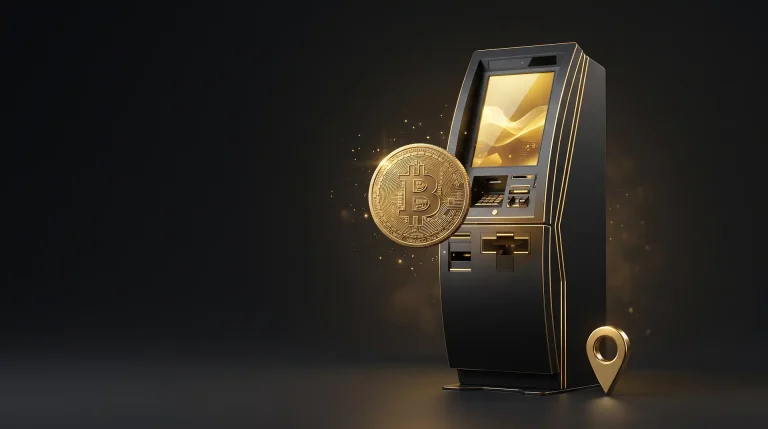
Two-way bitcoin ATMs let you send bitcoin from your phone and receive cash from the machine. You can find nearby kiosks with locators such as CoinATMRadar or operator websites.
How it works
Selling at a kiosk takes a little longer than buying, because the operator waits for your bitcoin to arrive.
- Find a machine that supports selling, since many only allow buying.
- Select “Sell” and verify your phone number and identity.
- Enter the cash amount you want, often in multiples of $20.
- Send the exact bitcoin amount shown to the machine’s address.
- Wait for confirmation, then collect your cash or a redemption code.
Things to know
Kiosks are fast, but the convenience comes with real downsides.
- Bitcoin ATMs are usually the most expensive way to cash out, with large markups built into the exchange rate.
- Daily limits apply, and some states cap transactions. California, for example, limits kiosk transactions to $1,000 per person per day.
- Crypto ATMs are heavily used in scams. The FBI’s IC3 recorded about $389 million in reported losses involving crypto ATMs in 2025.
- Use an ATM only when you truly need cash quickly, and never because someone else told you to.
Method 4: Peer-to-Peer Selling
Peer-to-peer (P2P) selling means selling bitcoin directly to another person, either through a P2P platform that holds funds in escrow or in a private transaction.
How P2P platforms work
Most reputable P2P marketplaces follow a similar escrow process.
- Create an account and verify your identity.
- Post an offer or respond to a buyer’s offer, including price and payment method.
- The platform locks your bitcoin in escrow.
- The buyer pays you through the agreed method, such as a bank transfer.
- Once you confirm receipt of payment, the platform releases the bitcoin to the buyer.
Risks of P2P
P2P can offer flexible payment options and sometimes better prices, but it carries more risk:
- Payment reversals. Some payment methods can be reversed after you release bitcoin, leaving you with nothing.
- Fake payment screenshots. Scammers may send edited images claiming they paid.
- Personal safety. Meeting strangers in person to sell for cash is risky.
- Legal issues. Regularly buying and selling bitcoin for others as a business may require a money transmitter license.
If you use P2P, stick to platforms with escrow and strong reputations, confirm payments in your own bank account before releasing coins and avoid reversible payment methods.
Method 5: Sell Spot Bitcoin ETF Shares
If you own bitcoin through a spot bitcoin ETF, such as BlackRock’s iShares Bitcoin Trust (IBIT) or Fidelity’s Wise Origin Bitcoin Fund (FBTC), cashing out works like selling any stock.
- Log in to your brokerage account.
- Place a sell order for your ETF shares during market hours.
- The trade settles, typically on the next business day.
- Withdraw the cash to your bank or keep it in your account.
ETFs are often the simplest option for people who want bitcoin exposure without managing wallets. Most large brokerages charge no commission to sell ETF shares, although the fund’s annual expense ratio applies while you hold it. Note that ETFs trade only during stock market hours, while bitcoin itself trades 24/7. If the ETF is held in an IRA, selling inside the account does not trigger taxes, but withdrawing from the IRA may.
Cashing Out From Your Own Wallet
Many long-term holders keep bitcoin in a self-custody wallet, such as a hardware wallet or a mobile app. You cannot sell directly from most wallets, so the usual route is to move coins to a platform that buys bitcoin.
- Choose where to sell. Pick an exchange, payment app or ATM that supports bitcoin deposits.
- Get the deposit address. Copy the bitcoin receiving address from the platform. Make sure it is a bitcoin address on the bitcoin network.
- Send a small test amount first. For large transfers, send a small amount and confirm it arrives.
- Send the rest. Choose a network fee that matches how quickly you need confirmation.
- Wait for confirmations, then sell. Once credited, follow the platform’s normal sell process.
Some wallet apps now include built-in “sell” features through partner services. These are convenient, but compare their rates and fees with those of a major exchange before using them.
Watch network fees
Bitcoin network fees vary with demand. In early November 2026, mempool.space showed very low recommended fees, but fees can spike during busy periods. Moving many small amounts from different addresses costs more than moving one larger amount.
Selling Large Amounts
If you plan to sell a large amount of bitcoin, for example tens or hundreds of thousands of dollars, a few extra steps can help.
- Use limit orders. Splitting a big sale into limit orders helps avoid moving the market price against you.
- Check withdrawal limits in advance. Ask your exchange about higher limits or wire options before you sell.
- Consider an OTC desk. Many major exchanges run over-the-counter desks that handle large trades privately at a negotiated price.
- Talk to a tax professional first. Large sales can push you into a higher tax bracket or trigger the 3.8% net investment income tax.
- Plan bank transfers. Let your bank know about large incoming wires to avoid delays or fraud holds.
Should You Sell All at Once?
Deciding how much to sell is often harder than deciding where to sell. Some people prefer to sell gradually rather than all at once, a strategy that mirrors dollar cost averaging when buying.
| Approach | How it works | Pros | Cons |
|---|---|---|---|
| Lump sum | Sell everything in one go | Simple; locks in the current price | Risk of selling just before a rise |
| Staged selling | Sell equal portions over weeks or months | Smooths out price swings | Risk of selling into a falling market |
| Target prices | Sell portions when bitcoin hits set levels | Takes emotion out of decisions | Targets may never be reached |
| Partial profit taking | Sell enough to recover your original investment | Keeps upside while reducing risk | Leaves you exposed to further drops |
There is no right answer for everyone. Your choice depends on why you are selling, your tax situation and how you would feel if the price moved sharply after you sold.
How Long Does It Take to Get Your Money?
Timing depends on the method and your bank.
| Step | Typical time |
|---|---|
| Bitcoin network confirmation for deposits | 10 minutes to about an hour |
| Sell order on an exchange or app | Seconds |
| ACH withdrawal to a US bank | 1 to 5 business days |
| Wire withdrawal | Same day to next business day |
| Instant withdrawal to a debit card (where offered) | Minutes, usually for a fee |
| ETF trade settlement | About one business day |
New accounts and first withdrawals can face extra holds while platforms check for fraud. If you need money by a specific date, such as for a home down payment or a tax bill, start the process at least a week early so that holds or bank delays do not cause problems.
Taxes When You Cash Out
Selling bitcoin is a taxable event in the US because the IRS treats crypto as property. Here is what to know.
How gains are calculated
Your gain or loss is the sale price minus your cost basis, which is what you originally paid including fees. For example, if you bought 0.1 BTC for $3,000 and sold it for $7,570, your gain is $4,570.
Short-term vs long-term
How long you held the bitcoin before selling decides which rate applies.
- Short-term gains on bitcoin held one year or less are taxed at ordinary income rates of 10% to 37%.
- Long-term gains on bitcoin held more than a year are taxed at 0%, 15% or 20%, depending on income. For 2026, the 0% rate applies to taxable income up to $49,450 for single filers and $98,900 for married couples filing jointly.
Reporting
Brokers now report sales on Form 1099-DA. For 2026 sales, they must also report cost basis for bitcoin bought on or after January 1, 2026, in the same account. If you transferred bitcoin in from another wallet, the form may show no basis, so you need your own records to report the correct gain. Sales go on Form 8949 and Schedule D.
Ways to reduce taxes legally
You cannot avoid tax on real gains, but timing and record keeping can lower the bill.
- Hold for more than a year to qualify for long-term rates.
- Sell in a year when your income is lower.
- Offset gains with losses from other investments.
- Choose which coins to sell using specific identification, if your records support it.
Keeping Records of Your Sales
Good records make tax time simple and protect you if the IRS has questions. For every sale, save:
- The date and time of the sale.
- The amount of bitcoin sold and the dollar proceeds.
- The original purchase date and cost, including fees.
- The platform used and any transaction IDs.
- Records of transfers between your own wallets and accounts.
Download your transaction history from each platform at least once a year. Exchanges can change their systems, close accounts or limit access to old data, and rebuilding records years later is difficult. Crypto tax software can import these files, match purchases with sales and produce the forms you need.
Avoiding Scams When Cashing Out
People converting crypto to cash are frequent targets. Watch for these red flags:
- Fake support agents. Scammers pose as exchange support on social media and ask for your login or recovery phrase.
- “Withdrawal fees” on fake platforms. A site shows big profits but demands fees before releasing funds. Real platforms deduct fees from the balance.
- Overpayment tricks. A P2P buyer “accidentally” sends too much and asks for a refund before their payment bounces.
- Pressure to use a bitcoin ATM. No legitimate business or government agency asks you to pay or withdraw through a crypto kiosk.
- Recovery scams. After a loss, fake “recovery experts” promise to get your funds back for an upfront fee.
Never share your recovery phrase, two-factor codes or passwords with anyone. If you are unsure whether a message is real, close it and contact the platform through its official app or website instead of using links or phone numbers in the message.
Choosing the Best Method for You
The right way to cash out depends on your situation.
| Your situation | Likely best option |
|---|---|
| Selling a large amount at the lowest cost | Advanced trading on a major exchange |
| Selling a small amount quickly | A payment app you already use |
| Need physical cash today | A two-way bitcoin ATM, accepting high fees |
| Own bitcoin through a brokerage | Sell ETF shares in that account |
| Want flexible payment methods and have experience | A reputable P2P platform with escrow |
Frequently Asked Questions
These answers cover common questions about selling bitcoin.
Yes. Most platforms let you sell small amounts, often as little as a few dollars’ worth.
Usually selling on an exchange’s advanced trading screen and withdrawing by ACH to your bank. ATMs and simple app sales tend to cost more.
Yes. The taxable event is the sale, not the withdrawal to your bank.
It depends on the platform and your verification level. Exchanges often allow large amounts, while apps and ATMs have lower limits.
Regulated US platforms require identity verification for most sales. Avoid services that promise anonymous cash-outs, as they may be scams or illegal.
Platforms may hold new deposits or first withdrawals to prevent fraud. Check the platform’s help center or contact support through its official website.
Yes. Exchanges and apps let you sell bitcoin 24/7, but bank withdrawals usually process only on business days. Spot bitcoin ETFs trade only during stock market hours.
Borrowing can give you cash without triggering a taxable sale, but it adds the risk of liquidation if prices fall. Selling is simpler and removes price risk on the amount sold.
Final Thoughts
There are five main ways to sell bitcoin in the US: crypto exchanges, payment apps, bitcoin ATMs, peer-to-peer platforms and spot bitcoin ETFs. For most people, an established exchange offers the best mix of low fees, high limits and reliable bank withdrawals, while payment apps suit small, simple sales and ATMs are a costly option for urgent cash.
Whichever method you choose, check fees before confirming, keep records for your taxes and stay alert to scams. Planning your sale around holding periods and income can also reduce the tax you owe when you cash out.
Sources
- Kraken: Fee schedule
- IRS: About Form 1099-DA
- IRS: About Form 8949
- IRS Revenue Procedure 2025-32: 2026 inflation adjustments
- BleepingComputer: FBI says Americans lost over $388 million to crypto ATM scams in 2025
- California DFPI: Daily transaction limit for crypto kiosks
- iShares: iShares Bitcoin Trust ETF (IBIT)
Disclaimer: This article is for general information only and is not financial, investment or tax advice. Fees and limits change; check current terms with each platform.